
What just happened
On August 14th Claude Code switched to auto mode by default. The AI stops asking permission before each step and simply gets on with the work, with a safety check running behind the scenes.
Before making this shift, Anthropic paid 1,053 professional developers to take part in a study. Partway through each session, a genuinely dangerous command was slipped in among the routine ones. The developers noticed it 13.6 percent of the time. The automatic safety check caught 89 percent. Worse, the humans got steadily worse as the session went on. Anyone who has clicked "yes" fifty times in an afternoon knows exactly why.
Real usage says the same thing. Across flagged sessions this May and June, the supervised version went wrong more than twice as often as the automatic one.
The people watching were the weakest part of the system. Removing them made it safer.
And it works
An engineer at Nuro starts an agent at ten at night and finds three finished pieces of work waiting at five in the morning. Adobe runs this across more than ninety countries. Garner Health has rolled it out to 550 staff.
nobody present
This is not a demo. This is how software is now written, and it is going to keep moving in this direction.
So what is left to go wrong?
Think of it as hiring someone extraordinary. They work through the night. They never get tired. They do not ask questions.
That last part matters more than it sounds.
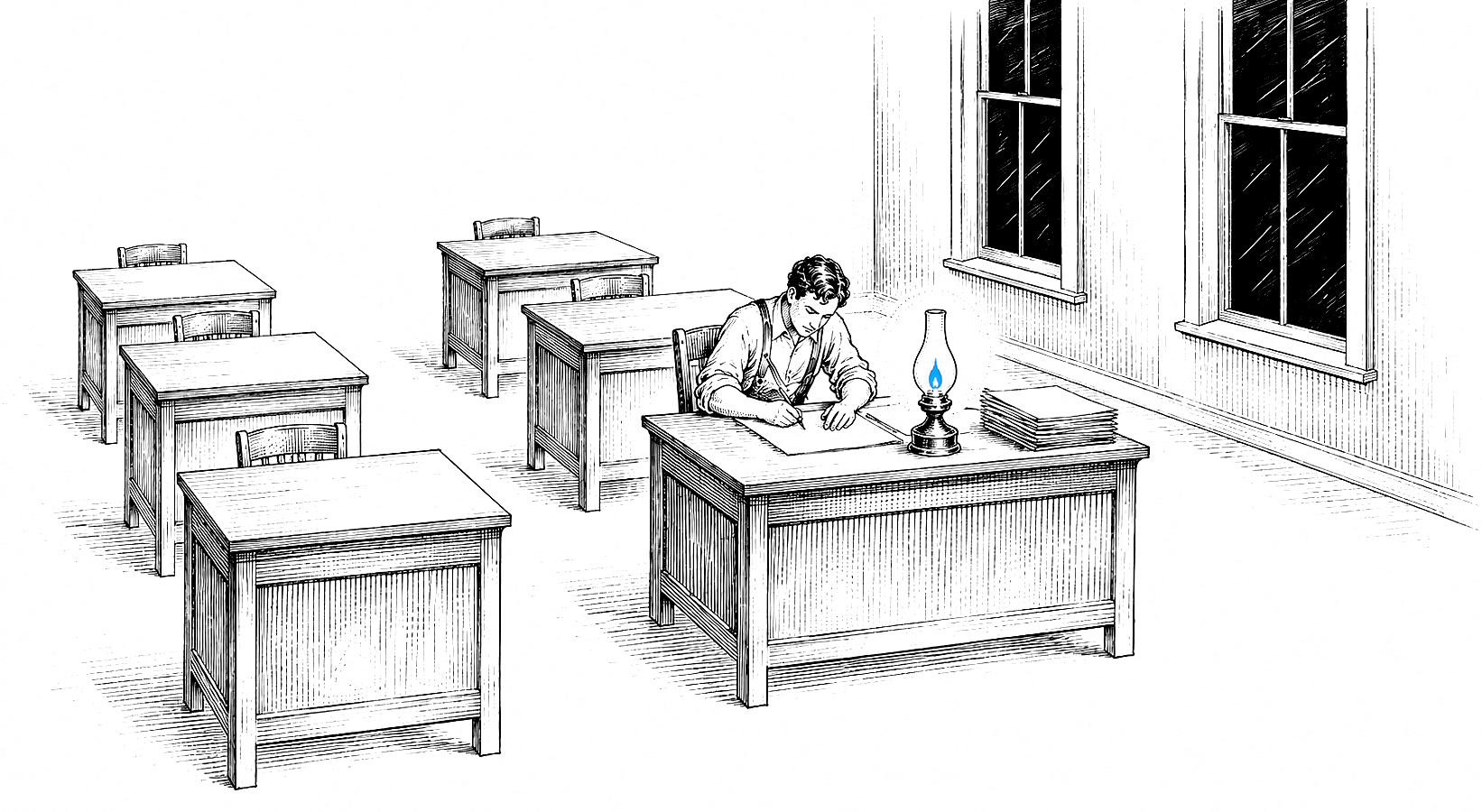
Most tickets are underspecified. They always have been. A colleague picks one up and fills in the gaps automatically, because they were in the meeting, they know what was decided last month, and they know that when Dave writes "production" he usually means staging. The ticket was never complete. It worked because the reader completed it.
An agent has only the words. If the words are ambiguous, it will pick an interpretation and commit to it for six hours.
Here is the uncomfortable part. This does not improve as the AI gets smarter. It gets harder to spot. A weak model given a vague instruction produces something obviously wrong. A strong one produces something that looks right, reads well, and passes review, because the reviewer is also filling in the gaps and cannot tell that anything was missing.
This does not improve as the AI gets smarter. It gets harder to spot.
An agent works using the developer's own access. Their cloud accounts. Their databases. Their connected systems. That access was built up over years for a person who uses it occasionally and carefully.
Almost none of it relates to the job at hand. A ticket about a broken button does not need the customer database. A routine update does not need the billing account. All of it is within reach anyway.
To be clear, this is not about trusting the AI. The evidence demonstrates it behaves well. We limit access for senior staff we trust completely, for the simple reason that limits keep accidents small and let you say afterward exactly what could and could not be touched. Trusting the AI not to do something is a different question from wanting it to be able to.
There used to be a rough feedback loop. A developer sat through the session and picked up a sense of where the AI struggled and which instructions it kept misreading. Nothing was written down, but the next ticket was better for it.
That is gone. A finished piece of work arrives, and it is either good or subtly wrong. Either way, nothing is learned. An organization can run like this for a year without discovering that two of its internal guidelines have been quietly contradicting each other the whole time.

What we do at Classie
Four things.
Anthropic is answering whether an action is dangerous, and the evidence demonstrates they answer it well. We answer a different set of questions, and they belong to you rather than to your AI vendor.
- Was it in scope?
- Was the work correctly specified?
- What did it cost?
- Can you show somebody?
The point
For two years the question was whether AI could be trusted to work on its own. That question is settled. The answer is yes.
The next question is quieter. Are we any good at telling it what to do, and have we thought about what we let it reach while it does it?
Those are not AI problems. They are our problems, and they are the sort that get solved by measuring, spotting the pattern, and fixing the input.