



Ask Poonacha Kongetira what makes AI different from every piece of software that came before it, and the answer is blunt: it's making it up as it goes along.
He was on Truth in IT with Small World Big Data's Mike Matchett to work through the mess that rapid AI adoption leaves behind. Shadow AI, surprise bills, compliance gaps that open faster than most teams can track them.
Not like the software sitting next to it
Most AI is non-deterministic. Models rest on a stochastic process, so behavior varies from run to run. Ninety-nine percent of builders, by his estimate, are using a model somebody else trained, a black box to them. And these systems can produce a workflow that nobody specified.
“We've never had this kind of behavior before,” he said. You cannot approve that once and walk away. It has to be supervised while it runs.
A model on every surface
Two years ago, Poonacha and his co-founders put a pin in the graph of AI adoption. Their read: soon after the ChatGPT moment, an AI application would live on every enterprise surface. The browser. The endpoint, where employees download coding agents and desktop AI tools. And the applications your own teams build and ship, mostly on Kubernetes. And the familiar SaaS workflow that quietly grew an embedded chatbot.
Two questions every enterprise has to answer
Strip away the technology and two questions sit underneath all of it. First, trust. Every enterprise has signed agreements with its customers covering privacy, operating policy, and secrets, and models running on your surfaces, sometimes moving data off them, put that trust at risk. Second, cost. Every enterprise is becoming a consumer of AI, and every embedded model call meters against you.
“I think those two things are fundamental to every enterprise,” he said. Neither can be answered without knowing what is actually running.
Supervision happens while the work is happening
Discover comes first. A small set of sensors, including Kubernetes operators, covers everything from the endpoint to core enterprise operations, and builds an inventory as containers spin up and users onboard new tools: what is running, what it connects to, and which credentials move from one person to another. Those, he noted, are all major failure points.
Then Analyze assembles the picture. One prompt fans out into a thousand downstream actions across surfaces, and that activity has to be stitched into a single record in real time, not reconstructed after the fact. That, in his words, is what an operational confidence layer does: discover what is running, analyze it as one record, and supervise it as it forms.
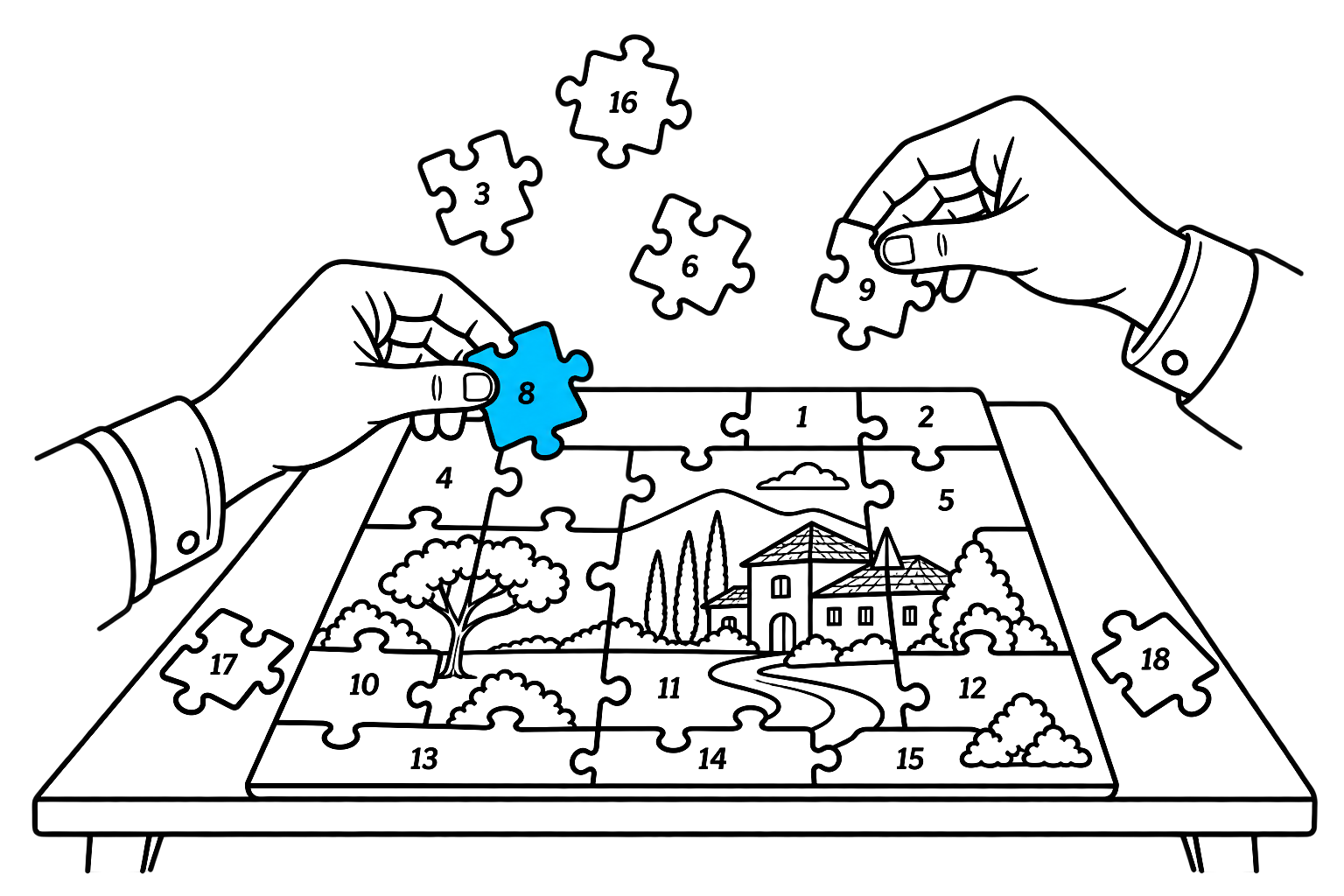
If you find pieces of a jigsaw puzzle and throw them into a box, it's not going to assemble itself. You have to tag and bag the pieces as they come in, so you assemble it in real time.
As the record builds, it throws up insights, alerts, and blocks on risky behavior. The audience shifts as you move through the stages: Discover is where cybersecurity teams live, and the conversation widens to the CIO for spend and to compliance for policy. The models themselves run locally, in your own virtual private cloud or on your premises, so the data stays put.
His closing advice was plain. In the rush to adopt, governance got pushed aside, so bring the right people together and build the policy framework. Then start. This thing moves faster than your requirements list.